
General Contracting Services
Construction Management at Risk in Lawton, Oklahoma
A guaranteed maximum price only holds if the scope under it was understood. That sentence is the whole case for construction management at risk. The contractor joins the owner and the architect while the drawings are still being made, prices them as they develop, and commits to a ceiling when enough of the design is settled to support one. The owner gets a partner who reviews the design for cost and buildability, and a price that does not float away if something is found in the field.
Owners in Lawton who choose this route usually fall in one of two groups. Some are public or institutional owners who want competitive pricing of the trades but also want the contractor's advice during design. Others are private owners with a complex building, an occupied site or a tight date, who want the contractor on the team before drawings are done. In both cases the open-book approach, where the owner sees the subcontractor bids and the contractor's fee, is the point of the delivery method.
If you are comparing methods, our design-build delivery page describes the single-contract option, and preconstruction estimating explains the pricing work that begins either way.
What the construction manager does
In the preconstruction phase we review drawings for constructability, build and update the estimate, develop a schedule, identify long-lead items, prepare bid packages and advise on site logistics. We lead the bidding, which means defining the scope of each trade package, inviting qualified subcontractors, collecting bids, leveling them so they compare fairly, and presenting the results to the owner.
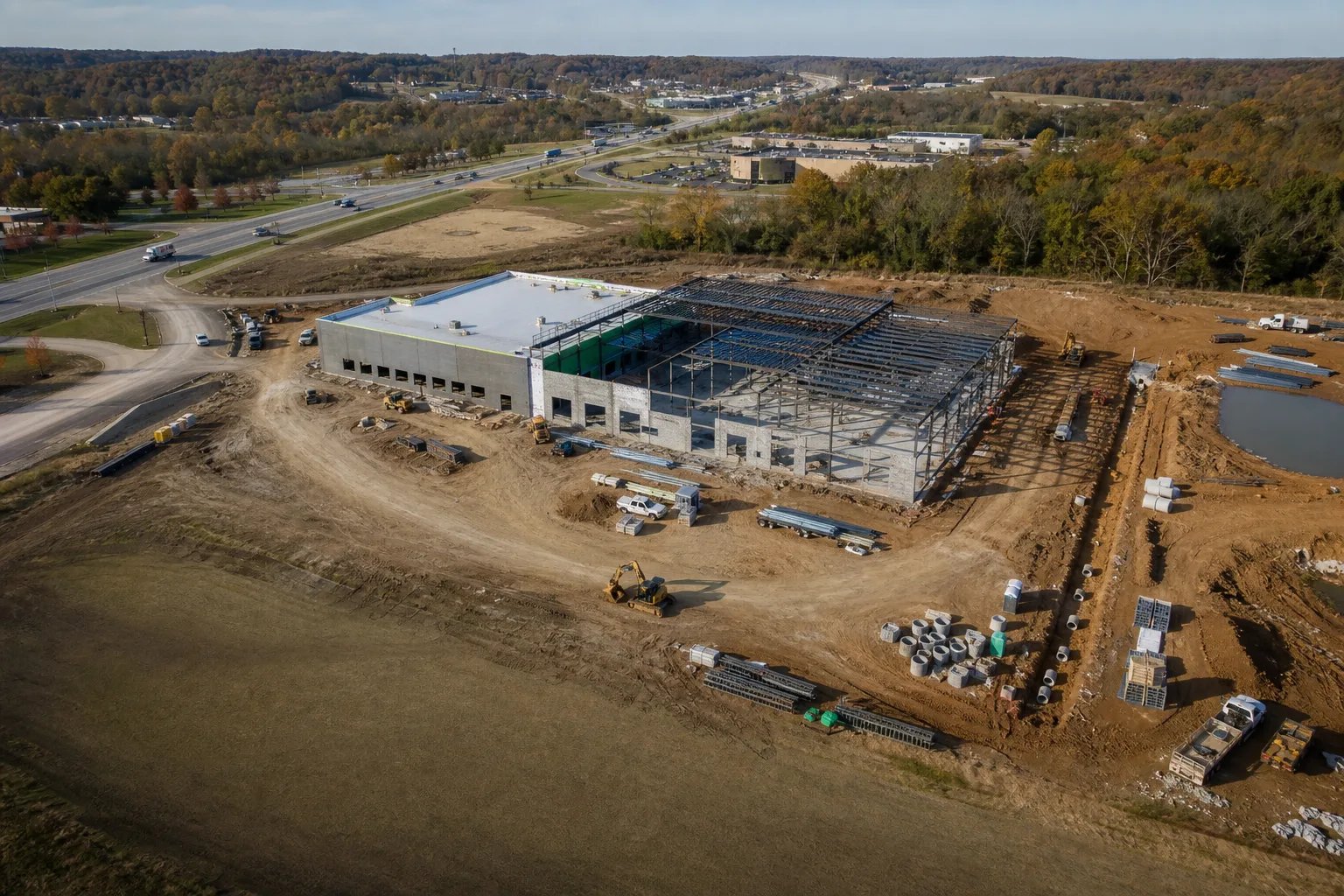
In the construction phase we manage the work: scheduling, coordination, quality control, safety, cost reporting, change management and closeout. Most of the physical work is done by subcontractors under contract with us, and we carry the risk of coordinating them. The owner receives a monthly cost report that shows the budget, commitments, costs to date and forecast to complete.
Bid packages in a thin local market
Lawton's trade base is smaller than that of a large metro. For some scopes only a few qualified local subcontractors exist, and for others the work draws bidders from other towns. We build bid lists early, talk with the trades about their capacity, and package the work so that qualified local firms can bid. Where the market is thin, we say so and plan for it, for example by splitting a package or extending the bid period.
Local public work is a factor as well. A January 2026 report from the annual State of Fort Sill dinner quoted the commanding general saying that equipment modernization, homeland defense upgrades and digitized command and control will drive the need to upgrade facilities and infrastructure across the installation, and that unit transitions will create new contracting opportunities for the Lawton Fort Sill community. When demand rises, trade capacity tightens, and an early bid process secures the subcontractors an owner wants.
Bid leveling is where an owner sees the value of an open process. Two bids for the same trade can differ by more than price: one may include temporary protection, testing or cleanup that the other leaves out. We lay the bids side by side, call each bidder to confirm what is in and out, and present a leveled comparison with a recommendation and the reasons for it. The owner can accept the recommendation or direct otherwise, and the record of that choice stays in the project file.
Phasing, occupied sites and early packages
CM at risk lets the owner start construction before design is complete. Site work, foundations and structure can be bid and built while interiors are still being drawn. That compresses the schedule but requires discipline, since early packages commit money before the whole price is known. We recommend early release only for work whose scope is firm, and we hold a contingency for design growth.
On an occupied site, phasing becomes the main task. A repair of heating and cooling systems across more than 1,700 Army family homes at Fort Sill, started in 2026 under an installation housing partner, shows the logistics of work in occupied buildings, with hundreds of separate households to schedule. Occupied work of any kind gets the same discipline from us: a sequence by building, notice to occupants, daily cleanup, and a record of what is complete.
How the guaranteed maximum price is built
The GMP is made up of the cost of the work, the contractor's general conditions, a contingency, and the fee. We define each in the agreement. The cost of the work comes from subcontractor bids and purchase orders, which the owner can review. Contingency covers cost growth within the defined scope and is held by the contractor, usually with the owner's visibility. Savings are shared or returned according to the contract, and we state that term clearly.
Owners should also ask what is excluded. Items such as owner-furnished equipment, special inspections, builder's risk insurance, permits and utility fees may sit outside the GMP. We list exclusions on the first page of the pricing, with an estimate of each where we can provide one, so that nobody discovers them at closeout.
Where we run CM at risk projects
The method suits projects across the Lawton market and its neighbors. In Frederick, a hospital that closed in 2016 was demolished in summer 2025, and Comanche County Memorial Hospital is building a new facility, Memorial Health of Tillman County, anticipating completion by the end of 2026 or early 2027. A project like that, with an owner spread over two counties and a firm opening date, shows why owners want a contractor who reports cost openly.
We take projects in Lawton and in the towns around it, including Frederick, and we look at the project's needs before the town's. Education and civic owners should see our education institutions page, and healthcare owners should see healthcare systems.
Bring us in while the drawings are open
Tell us the project, the delivery date and the stage of design, and we will explain how CM at risk would work for you.
Common Questions
What is the difference between CM at risk and design-build?
In CM at risk the owner keeps a separate architect and the contractor joins as a manager who guarantees the price. In design-build the contractor holds the architect's contract as well. The first gives the owner more design control, the second gives one point of responsibility.
When do you commit to a guaranteed maximum price?
When the design is developed enough that the scope is clear, often around the end of design development or mid construction documents. We list the drawings and assumptions the price is based on, so that later changes are measured against a baseline.
Can a public owner use CM at risk?
That depends on the agency and the statutes that bind it. We ask the owner's counsel which methods are allowed and what procurement steps apply, and we follow the process they confirm.
What happens if a trade bid comes in over the budget?
We report it the day it is known, with the cause, and bring options: rescope, rebid, substitute a different system or draw on the contingency. The owner chooses. Because we have been pricing through design, large gaps are rare, but we plan for them anyway.
How are savings handled?
The contract says. Common arrangements return unspent contingency to the owner or share it by a stated formula. We prefer to settle this before design begins.