Service Areas
Building Near the Wichita Mountains Wildlife Refuge
A county burn ban decides whether a welding crew, a slab-cutting crew or a roofing crew can work on a given afternoon, and near the Wichita Mountains Wildlife Refuge we plan around it. The U.S. Fish and Wildlife Service page for the refuge carried a Comanche County burn ban through October 5, 2026. That notice was for the refuge's visitors, but it is a reminder that grass fires start easily on this mixed-grass prairie, and that hot work, grinding and equipment exhaust need rules.
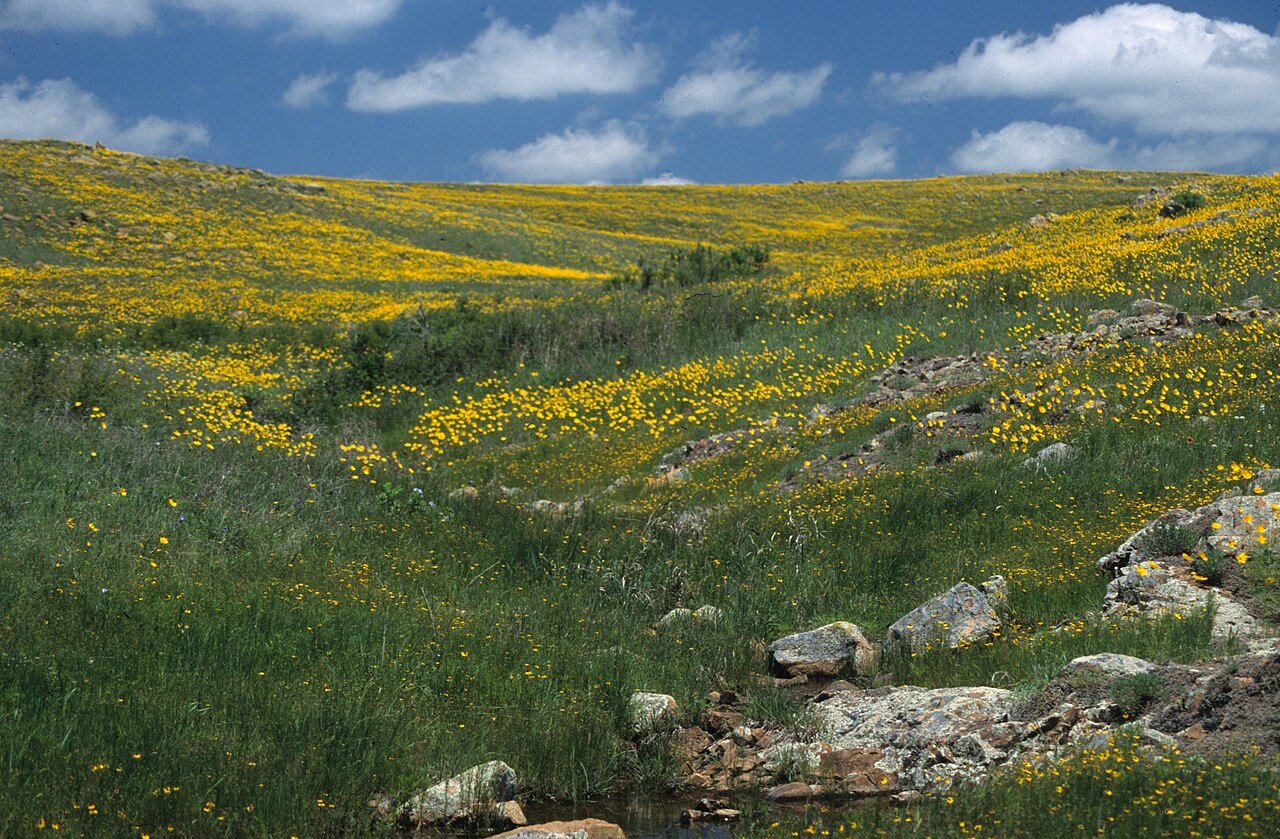
We want to be clear about scope. The refuge is federal land managed by the Fish and Wildlife Service, and we do not suggest that we build inside it. Our work is on private and municipal land nearby: lodging, restaurants, cabins, small commercial buildings, equipment sheds and rural homes-for-business. This page explains what changes when a site is next to about 60,000 acres of prairie, granite mountains and lakes, from fire rules to rock, drainage and neighbors.
Fire, hot work and dry grass
On any site near the refuge, we write a hot work plan before we start. It names who may cut, weld, grind or torch, sets a fire watch during and after the work, requires extinguishers and water within reach and stops work when the burn ban or wind conditions call for it. Equipment parked on dry grass can start fires from hot exhaust, so we clear a mowed apron around staging areas.
We also plan for the owner's insurance. Carriers near wildland areas often ask about defensible space, ember-resistant vents and roof materials. We discuss those questions at design, not at final inspection, because the difference between a metal roof with sealed vents and a wood shake roof is a difference in both cost and risk.
Granite, grading and drainage
Wikipedia describes the refuge as having granite boulders and granite-walled canyons, with about 59,020 acres in all, public use areas totaling 22,400 acres and about 15 percent designated wilderness. Granite near the surface changes excavation. Footings, utilities and septic fields may meet rock that needs hammering or blasting instead of digging, and the cost can be hard to predict without test pits.
We recommend a geotechnical investigation with probes or borings on any parcel near the mountains. Rock can be an asset: it supports heavy structures well when exposed. It can also trap water and push it toward neighbors. Our mass grading and stormwater and drainage services shape the site so water moves away from buildings and does not scour slopes.
Visitor traffic and the buildings it supports
Wikipedia says Medicine Park sits near the entrance to the roughly 60,000-acre refuge, rates the Lake Lawtonka trails as the top mountain bike trail area in Oklahoma by one biking site, and says the lake and refuge drew thousands of visitors, which is the tourism economy around the refuge. Those visitors need places to sleep, eat, rent equipment and park, and the buildings that serve them are small and seasonal.
For lodging owners, our hospitality construction work covers cabins, inns and event spaces, and our Medicine Park page covers renovation of older stone buildings in the town closest to the refuge entrance. For the larger city nearby, see Lawton.
Buildings we build near the refuge boundary
Cabin clusters, small inns, restaurants, outfitters and storage buildings are the most common requests. We build them with durable exteriors such as metal, masonry or fiber cement that stand up to sun, hail and fire risk, and with generous roof overhangs and drainage detailing. Wood is used where the design calls for it, with attention to treatments and clearances.
Utilities are a major scope item. Parcels outside towns may rely on wells, septic systems, propane and long electrical extensions. We price those with the building and ask utility providers for written quotes. Some parcels need a site development and utilities package larger than the building itself.
Weather in the mountains
The National Weather Service Norman office's Comanche County table lists an F0 tornado in the Wichita Mountains Wildlife Refuge on May 24, 1957 and an EF0 on May 7, 2014 near the refuge headquarters at Moko Mountain. The events were weak, but they show that storms cross the mountains. Hail, lightning and high wind are more frequent than tornadoes, and we design for them.
Roofing choices matter. Impact-resistant roofing, hail-rated panels and securely fastened flashings last longer, and insurers may offer better terms for them. For outdoor workers, we monitor lightning and move crews inside early. Remote locations also affect emergency response, so we map the nearest hospital and give every crew member the route.
Permits, environmental review and neighbors
Properties near federal land may face additional review for protected species, wetlands or stream crossings. We ask the owner early about any federal, state or local environmental review the project may trigger and refer them to qualified consultants. The question of which jurisdiction governs a parcel, whether a town, the county or another authority, comes first.
For public or accessible features, Oklahoma's accessibility requirement points to the federal ADA requirements. The Oklahoma Construction Industries Board states that licensed trade work requires trade licenses and registrations, and we verify each subcontractor's. If your project is for a municipal or public owner, our government and public sector page describes the procurement path.
Seasons, closures and access
Roads near the mountains are narrow, shared with visitors and sometimes busy on weekends and holidays. We schedule large deliveries early on weekdays, use flaggers where trucks cross public roads and ask the county about any load or width limits. Wildlife and cattle on the road are real hazards, and we tell drivers to expect them.
Weather windows matter as well. Concrete is poured in moderate temperatures where possible, steel erection is avoided in high wind, and roofing is timed around storm season. For owners who want to open for a peak season, we back-schedule from the opening date and tell them early when a decision date is approaching. If a hot, dry spell triggers new restrictions, we adapt the plan with the owner instead of pressing ahead.
Bring us the parcel near the mountains
Send us the location, the use and your insurer's contact if you have one. We will plan around fire, rock and water and give you a clear first estimate.
Common Questions
Do you build inside the Wichita Mountains Wildlife Refuge?
No. The refuge is federal land managed by the U.S. Fish and Wildlife Service. We build on private and municipal land nearby.
How do burn bans affect construction?
They limit hot work such as welding, cutting and grinding on days the ban applies. We write a hot work plan, schedule such tasks around bans and keep fire watch and water on site.
Will I hit rock when I dig?
Possibly. Granite near the surface is common near the mountains. A geotechnical investigation tells us what to expect, and we carry a rock allowance if it is likely.
What building materials suit a site near wildland?
Noncombustible roofing and siding, sealed vents and cleared space around the building help. We discuss options and costs with you and your insurer.
Is there a different permit path near the refuge?
It depends on the parcel. A town, the county or another authority may govern, and environmental review may apply. We ask early and tell you what we find.