General Contracting Services
Site Development and Utilities in Lawton, Oklahoma
Water mains, sidewalks and travel lanes share Cache Road, and the city has been working on all three at once. In August 2024 a local report described a waterline project on Cache Road near Sheridan, tied to sidewalk restoration, that was to run down to Fort Sill Boulevard, with barricades pulled off the road at the end of each workday to keep three lanes open. That is how site and utility work goes in a built-up area: the pipe, the pavement and the traffic all have to be managed together.
Site development is the work done before a building can start and after it is finished: clearing, grading, erosion control, storm drainage, water and sewer service, electrical and gas connections, curbs, paving, sidewalks and lighting. It is the least glamorous part of a project and often the part that decides whether the schedule holds. A building can be ready on time and still wait weeks for a utility connection nobody planned.
We handle site and utility work for our own building projects and for owners who need a pad delivered. Related topics are on our pages for mass grading and stormwater drainage, which go deeper on earthwork and runoff.
City standards and utility approvals
The City of Lawton publishes construction standard details that site work must follow, including a waffle slab detail, sidewalk and driveway, solid waste container pad, subdivision street, wheelchair ramps and erosion control, alongside water and sanitary sewer system drawings. We build from those details and ask the city engineer's office early about any conflict between a design and a standard, since an approved variance takes time.
Utility approvals run on their own tracks. The water and sewer connection, the electrical service, gas and communications each have their own application, fees and lead time, and the work often needs a licensed contractor in the relevant trade. The City of Lawton requires licensed contractors for electrical, mechanical and plumbing work and only city-licensed contractors can request inspections. Paving and curbs inside the right of way need a separate permit. We make a table of every approval and its timeline at the start of the job.
What the scope covers
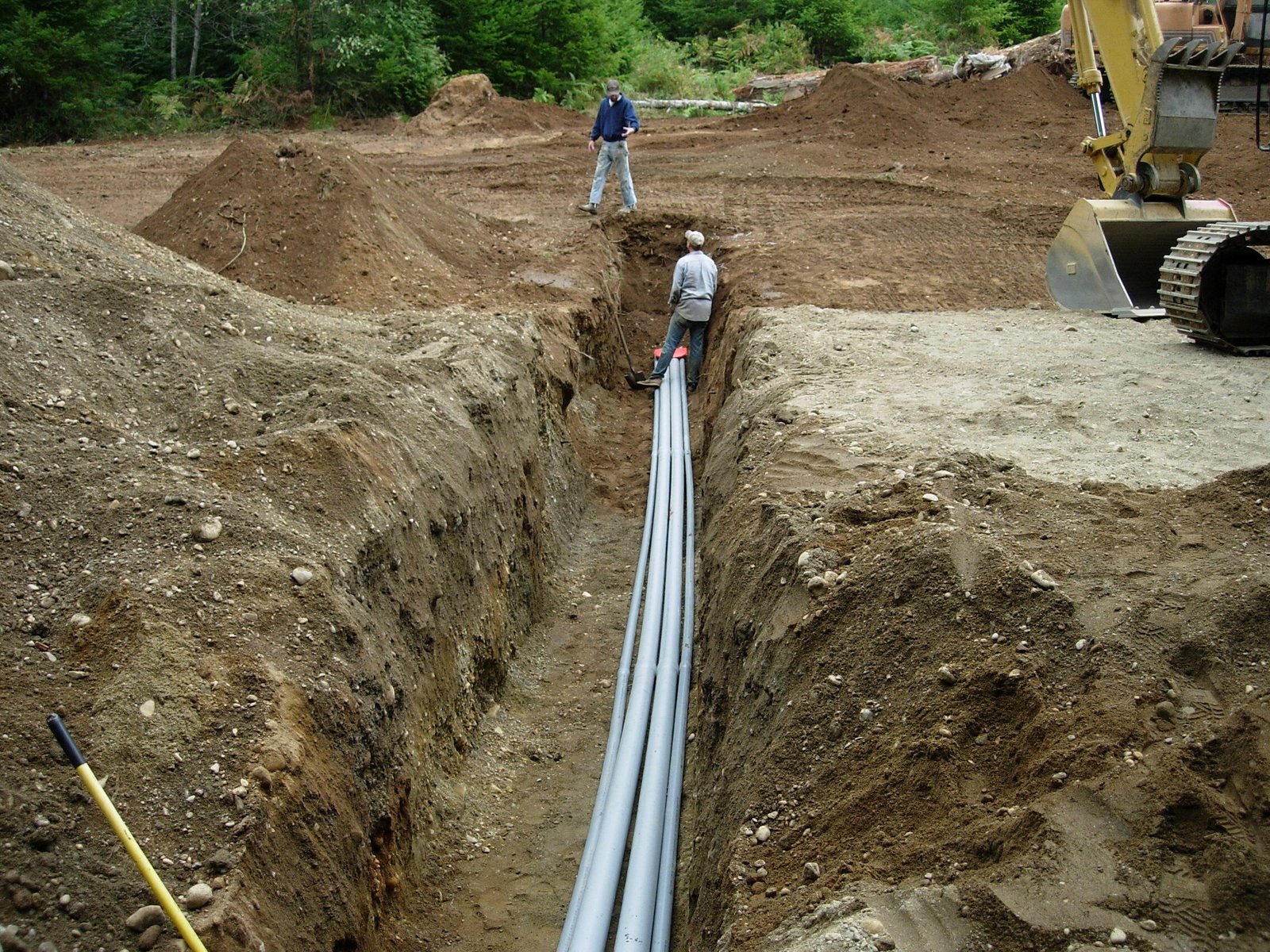
The sequence starts with a survey and a geotechnical review. We then clear and strip the site, bring in the subgrade, and build the storm drainage and utilities from the low point up. Utilities that cross each other are laid out on a coordination drawing so that gravity lines keep their slope. Trenches are backfilled and compacted to the specification, with density tests recorded.
Once the underground work is in and inspected, we build the pad, curbs, base course and paving, and finish with sidewalks, striping, lighting and landscaping. Erosion and sediment control stays in place throughout, with inspections after rainfall. The sequence can be changed to suit the building schedule: for example, we may build the truck court early to give delivery trucks a hard surface.
Water, soils and storms
Southwest Oklahoma weather tests every drainage design. The June 15, 2023 storm brought golf-ball hail and about 19,000 customers lost power, but intense rain is as relevant to site work. Detention ponds, inlet capacity and overflow paths are sized to the city's criteria, and we check them against the slope of the land. A wet subgrade means delays after rain and extra work to dry, recompact or replace it before paving.
Water supply varies by town. In Elgin, municipal water comes from the Rush Springs aquifer through wells east of town, and the council approved in July 2023 the purchase of drilling rights for $100,000 to add test and production wells. That is a medium-confidence regional report, so verify capacity with the city. We always ask the serving utility for a capacity letter before we commit to a design that depends on it. Our Elgin page has more.
Equipment and crews on a site job
Site work needs dozers, scrapers, excavators, compaction equipment, trenching machines and survey control. We keep survey control on the site from the first day, since a pad that is a few inches off its design grade affects drainage and the slab. Trench safety is a daily item: shoring or sloping, a competent person on site, and locates called in before digging.
Utilities run by other parties, such as the electric company, still depend on our schedule. We provide conduit, trench and pad, and the utility energizes on its own timetable. We build that wait into the sequence, and we confirm dates with the utility's planner rather than assume them.
Sequencing against the building and the weather
Site development often takes place while other parties wait for it. The building crew needs a pad, the steel erector needs laydown, and the concrete supplier needs a truck route. We schedule site work in segments, finishing the building pad and the main haul route first, then the rest, so that vertical construction can begin as soon as possible.
Industrial parks help here. The Airport Industrial Park in south Lawton is listed as certified site ready with roads and all utilities, and the SW Rail Industrial Park has more than 2,500 acres with utilities in place. A parcel in either one usually needs a service lateral and a pad, not a full utility extension, and the schedule improves. Where utilities must be extended, we price the length and the permits separately.
Related work
Owners usually need paving for trucks next, covered by truck courts and dock aprons and parking lot construction.
Developers should see commercial real estate developers, and industrial owners should look at the Airport Industrial Park page for a site with utilities in place.
Send the survey
Send the survey, the site plan and the utility letters you have, and we will return a sequence and a budget for the work.
Common Questions
What utility information should we have before buying land?
Capacity letters from the water, sewer, electric and gas providers, the location of existing lines and the cost and timing of extensions. Without them, the land price can look low and the total cost high. We help owners gather and price these before they commit.
How long do utility connections take?
It varies by provider and by what is needed. A simple service lateral may take weeks, while a main extension or a new transformer can take months. We list each connection and its lead time in the first schedule.
Do you handle erosion control permits?
We prepare and maintain the erosion and sediment controls the city's details require, keep inspection records and repair controls after storms. Larger sites may have additional state-level requirements, and we confirm them early.
Can the building start before site work is complete?
Often, if the pad and access are done. We sequence the work in segments so that vertical construction starts on a finished pad while the rest of the site continues.