
General Contracting Services
Parking Lot Construction in Lawton
Asphalt goes down in lifts, and the City of Lawton shows what that looks like in public. Its page on SW Lee Boulevard between 52nd and 38th streets reports that the first of three 1,000-ton asphalt lifts was about to start, after more than 9,100 linear feet of curb and gutter had been poured. A private parking lot is built the same way on a smaller scale: subgrade first, base next, then surface, with each layer proven before the next goes on.
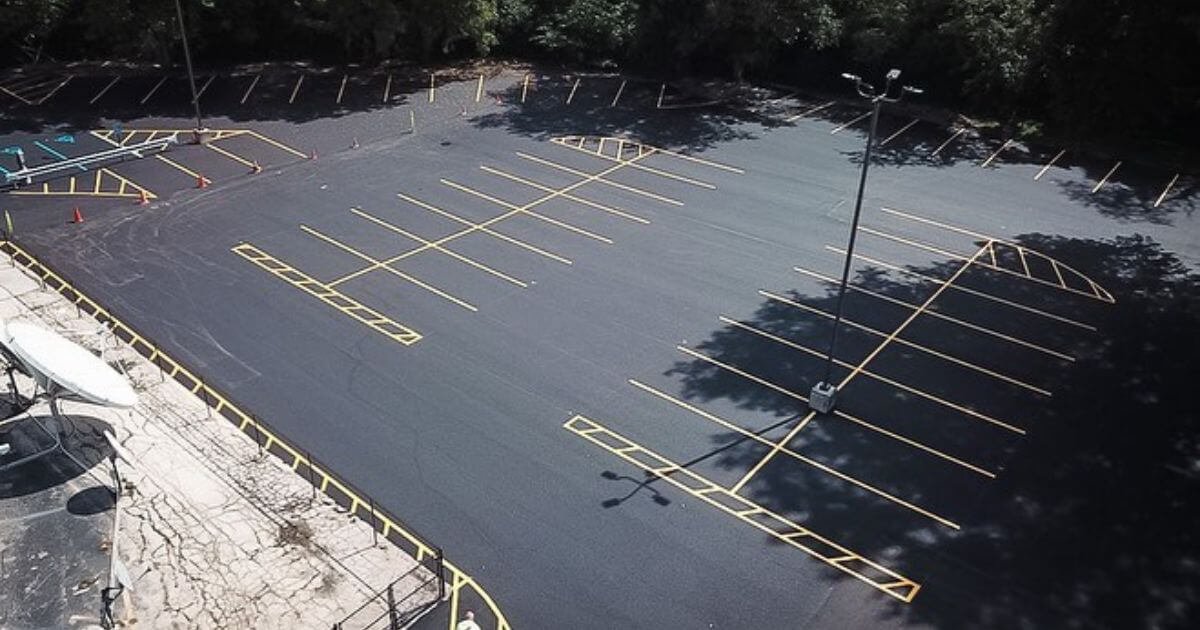
We build parking lots for retail centers, offices, medical campuses, apartments, hotels and industrial sites. That includes new lots on graded pads, expansions beside occupied buildings, and full reconstruction of lots that have failed. Striping, curb, gutter, wheelchair ramps, lighting bases and signage are part of the same package, since a lot is not finished until a driver can park in it.
The question we ask first is what will drive on it. A customer lot, a service lot with delivery trucks and a lot that doubles as a fire lane need different sections, and the price follows.
Subgrade to striping
A standard parking lot scope runs from the subgrade to the paint. Subgrade is proof-rolled and corrected. Base course is placed and compacted. Asphalt or concrete paving is placed, and the edges are formed with curb or left with a thickened edge. Inlets, catch basins and drainage structures are set to grade as part of the paving sequence; where they were not built earlier, we coordinate with the drainage scope. After paving come joint sealing, striping, wheel stops, signs and bollards.
ADA elements get their own attention. Slopes, cross-slopes, landings and ramps are measured as they are built, not after. Accessible stalls and routes have to meet the dimensions on the drawing, and we check them with a level before the surface course is placed. A lot that fails accessibility inspection costs real money to correct.
Why lots fail and what storms leave behind
Lots fail for ordinary reasons: weak subgrade, water that cannot leave, and loads heavier than the section was designed for. Hail and wind do not damage pavement directly, but a lot littered with debris after a major storm needs cleanup and inspection before it reopens. The June 15, 2023 storm that struck Lawton brought golf-ball hail and wind gusts of 65 to 70 mph, according to a KCCU report, and the aftermath showed how many commercial properties depend on usable parking to restart business.
Reconstruction projects add their own complexity, since businesses stay open. We typically work in sections, keeping a portion of the lot and a clear path to the entrance in service, with barricades and signs to guide drivers. The phasing approach for occupied sites is described on its own page. For vacant property being brought back, such as a former cinema or mall, existing pavement and utilities must be inspected before a new use is planned.
Asphalt, concrete and the paving calendar
Asphalt costs vary with oil prices and the haul distance from the plant. Concrete costs vary with cement and truck availability. We gather quotes on the day the proposal is issued and tell the owner how long the price holds. Key cost drivers are the pavement thickness, the subgrade correction, the amount of curb and the number of drainage structures. A lot with many islands and a lot with none can differ by a large fraction of the budget.
The City of Lawton has put a large public program behind street resurfacing, with a goal of 105 streets in 2025 under a mill-and-overlay program, according to a Southwest Ledger report. When many projects are in the market at once, asphalt crews and plants get busy. We advise owners to book their paving window early and to avoid asking for pavement in the hottest or coldest weeks. Owners who are comparing designs for retail centers often ask us how stall counts and drive aisle widths change the budget.
Building the lot as a system
Our approach is to build the lot as a system. We start by walking the site with the owner and, when available, the property manager. We establish traffic flow during construction, plan for deliveries, and confirm which entrances must stay open. Then we plan the work in sections that can be completed and opened in a few days each.
Quality checks include density tests on the base, temperature checks on the asphalt as it arrives, and a visual check of the surface for segregation and roller marks. For concrete lots, we check slump, joint layout and curing. A finished lot gets a final walk with the owner, a punch list and a maintenance note covering sealcoating and crack sealing. Central Plaza, the former mall in Lawton, has been repositioned as a site for defense contractors according to a Business View magazine feature, and a repositioned property like that needs its parking reviewed for the new tenants' hours, security and loading. See our renovation and adaptive reuse page for the building side of that work.
Weather windows and opening day
Paving is weather-dependent and most schedules are built around a few good weeks. Asphalt needs warm ground and dry subgrade. Concrete needs protection from heat, wind and freezing. We build float into the calendar and propose a backup plan, such as shifting to another area of the site, when rain interrupts.
Restriping and signage are the last step, and they are often delayed by the temptation to open the lot early. We recommend a short cure period before striping to avoid tracking. For owners opening a new store, health center or school, we align the final paving date with the certificate of occupancy so that the lot is ready when the doors are. Lawton Community Health Center's move into the old Carmike Cinemas building on Cache Road is an example of a vacant property turning into a new use, where parking has to be rechecked against the new occupancy. It touches the healthcare owners we serve in the area.
Ask us about your lot
Tell us whether it is new, expanding or failing, and send a survey or site plan if you have one. We will walk it, price the options and give you a paving window. Use the quote form or call.
Common Questions
How long does a new parking lot take to build?
Once the pad is graded and utilities are in, a lot of an acre or two is typically a matter of days for paving and a few more for curb, striping and signs. The longer items are base preparation and weather. We provide a day-by-day schedule.
Can you work while my business stays open?
Yes. We split the lot into sections, keep an accessible entrance and mark the route with barricades and signs. Deliveries and trash pickup are planned around the work, and we confirm the plan in writing.
Is asphalt or concrete better for a parking lot?
For most customer lots, asphalt is the lower first cost and easier to repair. For heavy truck areas, dumpsters and drive-through lanes, concrete often lasts longer. We price both so you can compare.
What does ADA compliance involve?
Accessible stalls, access aisles, ramps and routes must meet slope and dimension limits. We measure them during construction and again before paving, so corrections happen before they are expensive.
What maintenance should we plan for?
Crack sealing within the first few years, periodic sealcoating if the lot is asphalt, and cleaning of inlets. We provide a short maintenance sheet at turnover.