
General Contracting Services
Mass Grading for Lawton Commercial and Industrial Sites
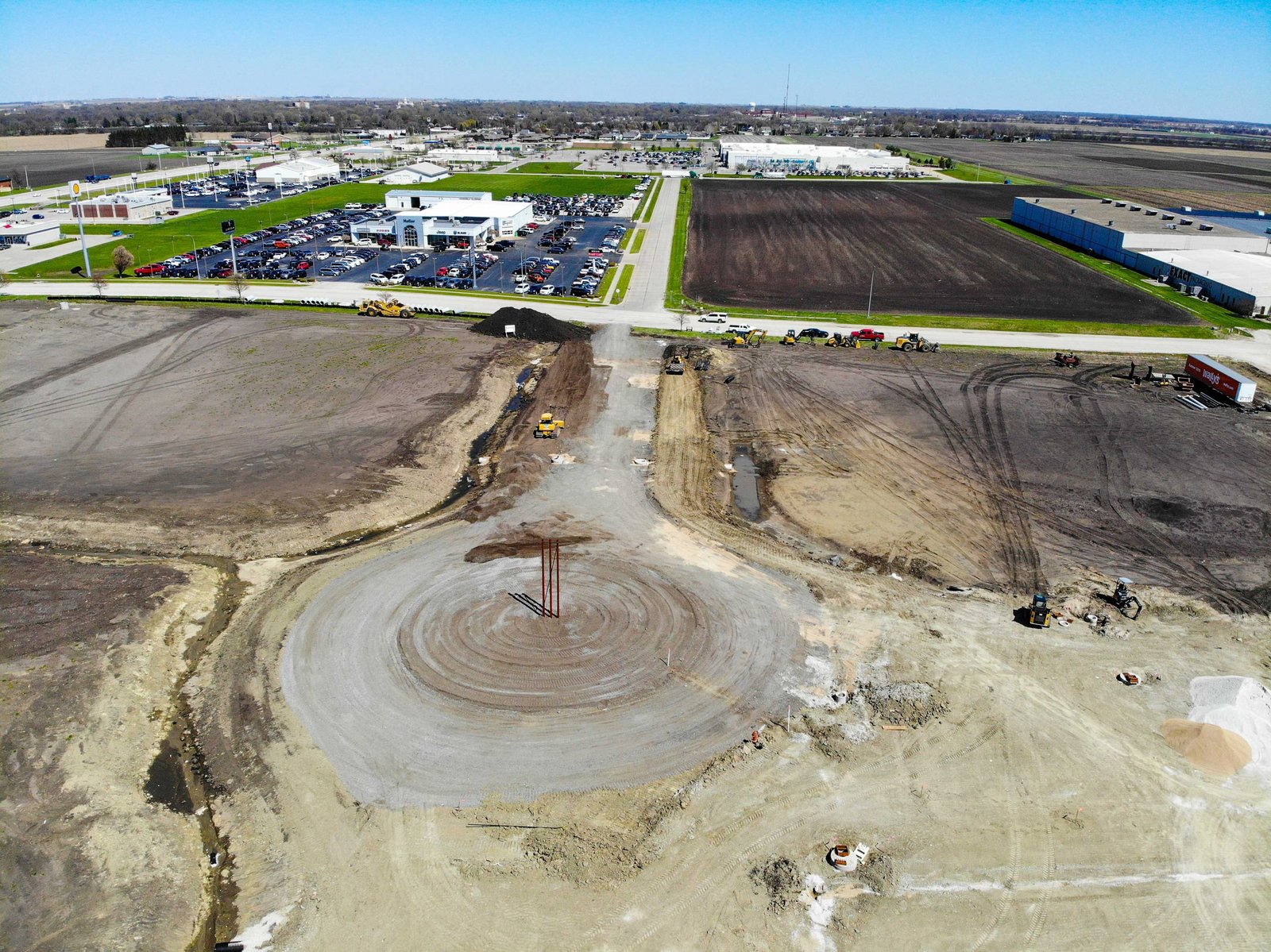
Dirt moves first, and everything after it depends on how the pad was cut, filled and proven. On a Lawton job, mass grading is the stretch of work between the survey stakes and the first footing, and it is where a schedule is most often won or lost. We strip topsoil, cut and fill to the grades on the civil sheets, haul or stockpile the balance, and compact each lift to the density the geotechnical report calls for. Then the testing lab signs off, and the next trades can start.
Southwest Oklahoma gives us wide open ground. The Oklahoma SW Rail Industrial Park on the west side of Lawton is described by the Lawton-Fort Sill Economic Development Corporation as more than 2,500 acres with utilities in place and the Stillwater Central Railroad running through it. Sites that size are graded in pieces, and each piece needs its own haul route, its own erosion controls and its own turnover date to the next contractor.
We write the earthwork plan before we mobilize. It names the cut and fill volumes, the haul distance, the stockpile locations, the water source for dust control, and the days we expect to lose to wind and rain. If a pad is going to a tenant with a fixed opening date, the plan works backward from that date.
What a grading package covers
A grading scope on a commercial or industrial pad usually has five parts. First comes clearing and stripping, with topsoil set aside for landscape areas. Second is the cut and fill itself, run in lifts no thicker than the geotechnical engineer allows. Third is subgrade preparation under slabs and parking lot pavements, including proof-rolling and, where the report requires it, lime or cement treatment. Fourth is the finish grade that makes water leave the site in the direction the drainage design assumed. Fifth is the as-built survey, which the owner needs for the civil closeout.
We also handle the work that sits between those parts. Haul roads get graded and maintained so trucks do not rut the subgrade we have just approved. Wheel wash or rock entrances keep mud off public streets, which matters on any parcel that fronts a city street under rehabilitation. Where a pad abuts stormwater and drainage work, we sequence the pipe and inlets so the grade is not cut twice.
Large sites and what site ready means
The Airport Industrial Park in south Lawton, at Highway 277 and Interstate 44, is listed by the economic development corporation as certified site ready, with a 43-acre site, a 71-acre site, and 40-, 25- and 75-acre parcels owned by the Commissioners of the Land Office. Certified site ready means roads and utilities have been brought to the property. It does not mean the pad is ready for a building. A user that wants a 110,000-square-foot warehouse still needs a graded, tested and drained surface, and that is the work we price.
For buyers comparing parcels, the grading cost is often the swing item. A flat, previously disturbed parcel next to existing utilities costs less to prepare than a sloping parcel that needs retaining cuts and long haul. We walk a site before a number is given, and we ask for the geotechnical borings before we commit to a fill plan. If borings are not yet available, we say so in the proposal and carry an allowance with the assumption written next to it. A commercial concrete floor placed on a poorly compacted pad will crack, and the owner pays for it later.
How we run a pad from stakes to turnover
Our process is written and repeatable. Before a blade touches the ground we confirm the survey control, locate every existing utility, and confirm which erosion and sediment controls are required by the permit set and the City of Lawton's erosion control standard detail. The City Standards page lists that detail alongside its sidewalk, driveway and wheelchair ramp drawings, so we build to the same sheets the city inspector carries.
During the work we keep a daily log of loads, lifts, compaction tests and weather. If the testing lab flags a failing area, we rework it the same day rather than burying it. At the end of each phase we hold a walk with the owner's representative and the civil engineer, and we do not move on until the grade is accepted. Where a pad will be used by a tenant that is also hiring a foundation contractor, we hand over the pad with written benchmarks, so the next crew does not have to reestablish control.
Wind, dust and rock near the Wichitas
Wind is the first condition every grading crew in this area plans around. Dry, windy days put dust in the air and take moisture out of the fill, so water trucks run early and often. A pad that was in spec at noon can fall out of spec by evening if it is left uncovered. We stage compaction so that a lift is finished, tested and sealed before the weather changes, and we keep a plan for rain events that tells the crew where to shape the surface so water runs off instead of soaking in.
The Wichita Mountains lie a short drive west of the city, and the Medicine Park cobblestone buildings are made of red granite local to that range. That is a reminder that rock in this part of the state can be closer to the surface than a buyer from the plains expects. We do not assume. We read the borings, and when rock or hard layers show up we price ripping or hammering as a separate line. Surprises of that kind are far cheaper when they are in a contract than when they show up in a change order.
What moves the price of earthwork
Four things drive the cost of a grading package. The first is net earthwork balance: sites that cut and fill close to even are cheaper than sites that import or export. The second is the haul distance for the balance. The third is the quality of the on-site soil, because wet or weak material may need drying, mixing or replacement. The fourth is the schedule, since compressing a four-week earthwork program into three means more machines and more testing.
We show these items separately in the proposal. We would rather an owner see a unit price for import fill than a lump sum with no explanation. If a site is a candidate for a phased release, as happens with a campus or a multi-building park, we price the first phase firm and carry the later phases as options. Distribution and logistics users in particular tell us how the pad connects to long-lead procurement: when steel or equipment is arriving on a known date, the grading end date is fixed, and the proposal says how many crews and shifts it takes to hit it.
Send us the survey and the borings
Tell us where the parcel is, how many acres are in play and when the building crew needs the pad. We will review the civil sheets, walk the site and return an earthwork proposal with unit prices, a calendar and the assumptions written plainly. Call or use the form on this page to start.
Common Questions
How long does mass grading take on a ten-acre commercial pad?
It depends on the earthwork balance and the weather, but a ten-acre pad that cuts and fills close to even is usually a matter of weeks, not months. The longer items are testing and rework, not the cut itself. We give a calendar with the weather days built in and identify the date the pad can be turned over to the foundation crew.
Does certified site ready mean I can start vertical construction right away?
No. Certified site ready means roads and utilities have been brought to the parcel, as the economic development corporation describes for the Airport Industrial Park. It does not mean the pad is graded, tested or drained for your building, so the earthwork still has to be bid and built.
What testing should I expect during grading?
Expect density tests on each fill lift, proof-rolling of the exposed subgrade, and moisture checks that the lab reports to the engineer. We coordinate the lab visits with the work, and we share results the same day so that a failing area is reworked before more fill is placed over it.
How do you control dust and mud on a windy site?
Water trucks run on a schedule, haul roads are graded to drain, and rock entrances keep tracking off the street. If the wind is strong enough to make dust control ineffective, we pause the dry work rather than let it leave the site. The City's erosion control detail sets the baseline for the silt fencing and inlet protection we install.
What happens if we hit rock or soft ground that was not in the borings?
We stop, document it with photos and a survey point, and notify the owner and the engineer the same day. The proposal carries unit prices for rock excavation and undercut, so any change is priced from a number you have already seen.