General Contracting Services
Cold Storage Construction in Lawton, Oklahoma
Refrigerated space is a power problem first and a building problem second. A cold store holds product at a set temperature around the clock, and every hour the compressors, fans and defrost heaters cannot run puts that product at risk. When we talk to an owner about cold storage in the Lawton area, we start with the electrical service, the backup plan and the refrigeration system, then move to the shell, because the shell exists to keep the cold in.
Lawton does not have a large cold chain cluster, and we say so plainly. What it has is a food-processing employer, beverage and food distribution tenants at the Airport Industrial Park, a hospital and a military installation, all of which move perishable goods. A cold store here is usually a purpose-built addition to an existing operation, a freezer or cooler expansion at a plant, or a regional distributor's building that serves restaurants, grocers and institutions.
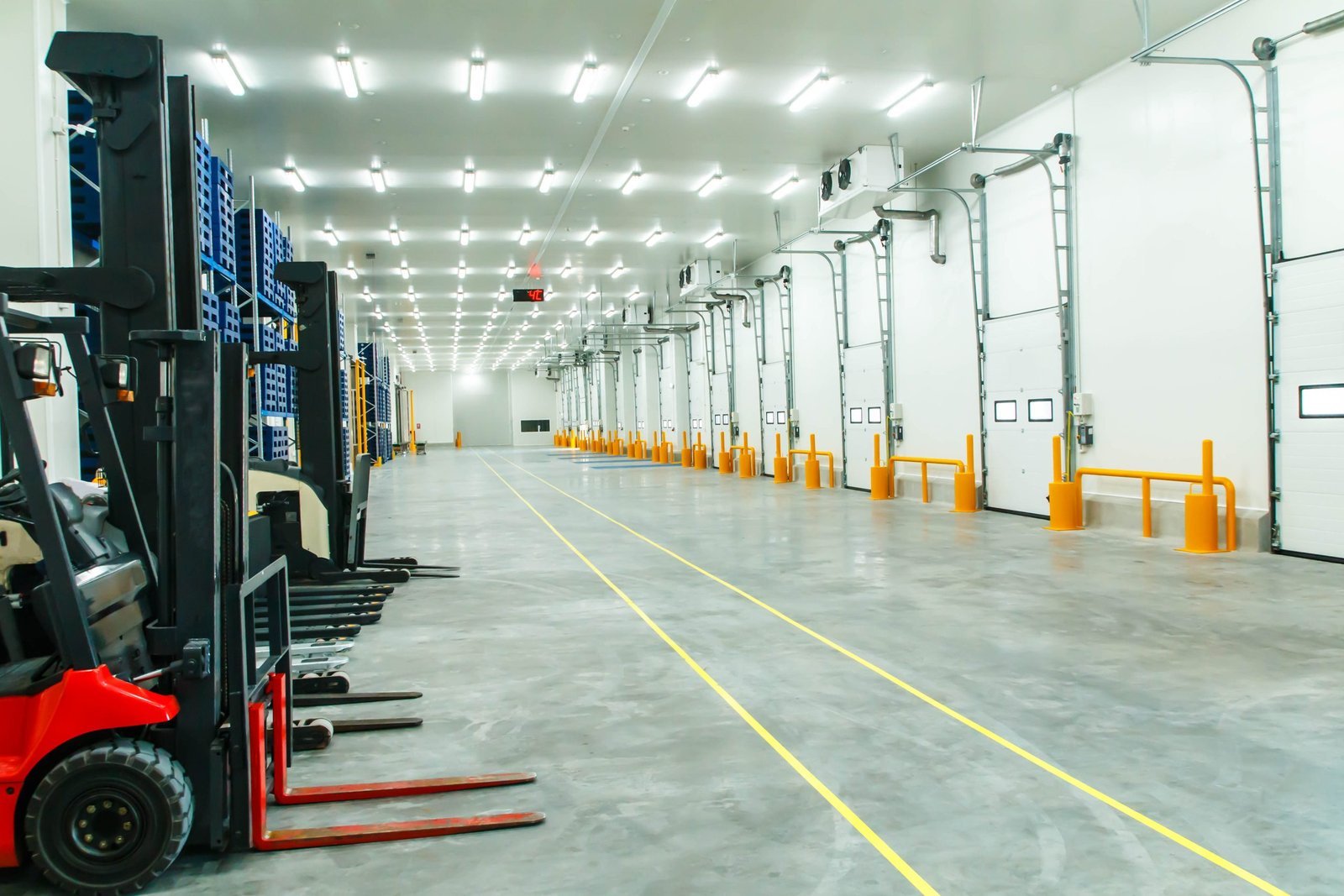
We build the insulated envelope, the slab with its under-floor protection, the dock and vestibule systems, and we coordinate the refrigeration contractor who installs the system. For the building without refrigeration, see warehouse construction; for the larger flow-through type, see distribution center construction.
Power, outages and the plains
On June 15, 2023, a storm with golf-ball hail and gusts of 65 to 70 mph left about 19,000 Public Service Company of Oklahoma customers without power at the peak, according to a KCCU report. That is the kind of event a cold store must be designed for. We discuss generator size and fuel storage with the owner, the transfer switch, and how long the building can hold temperature with the doors shut. Insulated panels and a tight envelope buy time, and the owner decides how much time to buy.
The tornado record is also part of the picture. The National Weather Service lists tornadoes across Comanche County, including an F3 near the Lawton airport in 1979. A refrigeration plant on the roof or beside the building needs anchorage, protection for the condensers and a plan for shutting down safely when a warning is issued. We bring those items to the design meetings rather than leave them for later.
Refrigerants, fire protection and review
Refrigerant choice drives code review. Ammonia systems, common in large cold stores, have process safety and emergency response requirements that go beyond the building code, while synthetic refrigerants have their own handling and leak detection rules. We involve the refrigeration engineer and the city's Fire Prevention Division early, since the division reviews building plans through the permitting process and works with Building, Planning and Engineering on new commercial development.
Fire protection in freezers is unusual. Sprinklers in a freezing environment are often dry or pre-action systems, and insulated panels with foam cores require careful detailing. The City of Lawton requires a complete plan set with mechanical and electrical sheets for a permit, and the statewide minimum codes are adopted by the Uniform Building Code Commission, so we confirm the local edition with Inspection Services at the start.
What makes cold storage expensive
A cold store costs more per square foot than a dry warehouse, often by a wide margin, and the gap comes from four places: insulated panels, the refrigeration plant, the slab with its heating or ventilation system, and the electrical service. Temperature matters. A cooler at 35 degrees is a different building from a freezer at minus 10, and a blast freezer with rapid chill is different again. We ask owners to give us the product, the setpoints and the throughput before we price.
Operating costs are part of the decision as well. A thicker panel costs more now and uses less energy for years. Efficient defrost, variable-speed fans and tight door seals cut the power bill. We show first cost and annual energy side by side, and let the owner pick. Our preconstruction estimating work includes this comparison.
Slab, vapor control and the envelope
A freezer slab is built on layers of insulation and often has a heating system underneath, since freezing ground can heave and crack the floor. We detail the vapor barrier carefully, because moisture that gets into insulation ruins its value. Panel joints, penetrations and door frames are the common leak points, and we inspect them before the panels are covered.
Docks need vestibules and fast doors, and the dock seals are a continuing maintenance item. Water supply is a design topic too. The town of Elgin, for example, agreed in 2023 to buy water-drilling rights for $100,000 over the Rush Springs Aquifer to drill wells for its municipal system, and a food or cold storage user locating there would ask about water quality and capacity. That item comes from a regional news report and should be checked with the town. See Elgin.
Owners we serve
Food processors, beverage distributors, grocers' suppliers, hospitals and institutional kitchens all need cold storage in some form. The economic development corporation's employer table lists a food processor with 350 employees in Lawton, and the Airport Industrial Park houses distribution tenants. Owners in logistics and distribution are our largest group of cold-store buyers.
The building type that results is described on the cold storage facility page, and food companies should also read the page on food and beverage processing.
Start with the setpoints
Tell us the products, temperatures and throughput, and we will return a building concept, a refrigeration coordination plan and a budget range.
Common Questions
How long can a cold store hold temperature if the power fails?
It depends on the insulation, the product mass and the temperature rise the product tolerates. A well-insulated building with a full load may hold for many hours, but a generator is the real answer. We size it with the owner and test it as part of closeout.
Do we need a special slab?
For freezers, yes. The slab sits on insulation with heating or ventilation underneath to prevent frost heave. For coolers above freezing, a conventional insulated slab is often enough. The setpoint decides.
Who installs the refrigeration system?
A specialty refrigeration contractor, with an engineer designing it. We coordinate their work with the building schedule, because the system needs the envelope finished, the slab placed and the electrical service ready before it can be started.
Is cold storage realistic in a market like Lawton?
For the right operator, yes. Local food processing, beverage distribution and institutional demand create a base. We would rather help an owner size a building to a real need than overbuild on speculation.
What are the typical permits?
The building permit, mechanical and electrical permits with licensed trade contractors, fire protection review and, for ammonia systems, additional process safety documents. We assemble the set for city review.