General Contracting Services
Distribution Center Construction in Lawton, Oklahoma
Trucks leave Lawton by the turnpike, and the turnpike is being rebuilt around them. Interstate 44, the H. E. Bailey Turnpike, runs from Walters and Randlett in the south past Lawton and on north to Chickasha, and it is the spine of any distribution building planned here. A distribution center is judged by how quickly it turns freight, which means the first questions about a site are about ramps, queueing room, truck courts and the number of dock doors, long before anyone asks about wall panels.
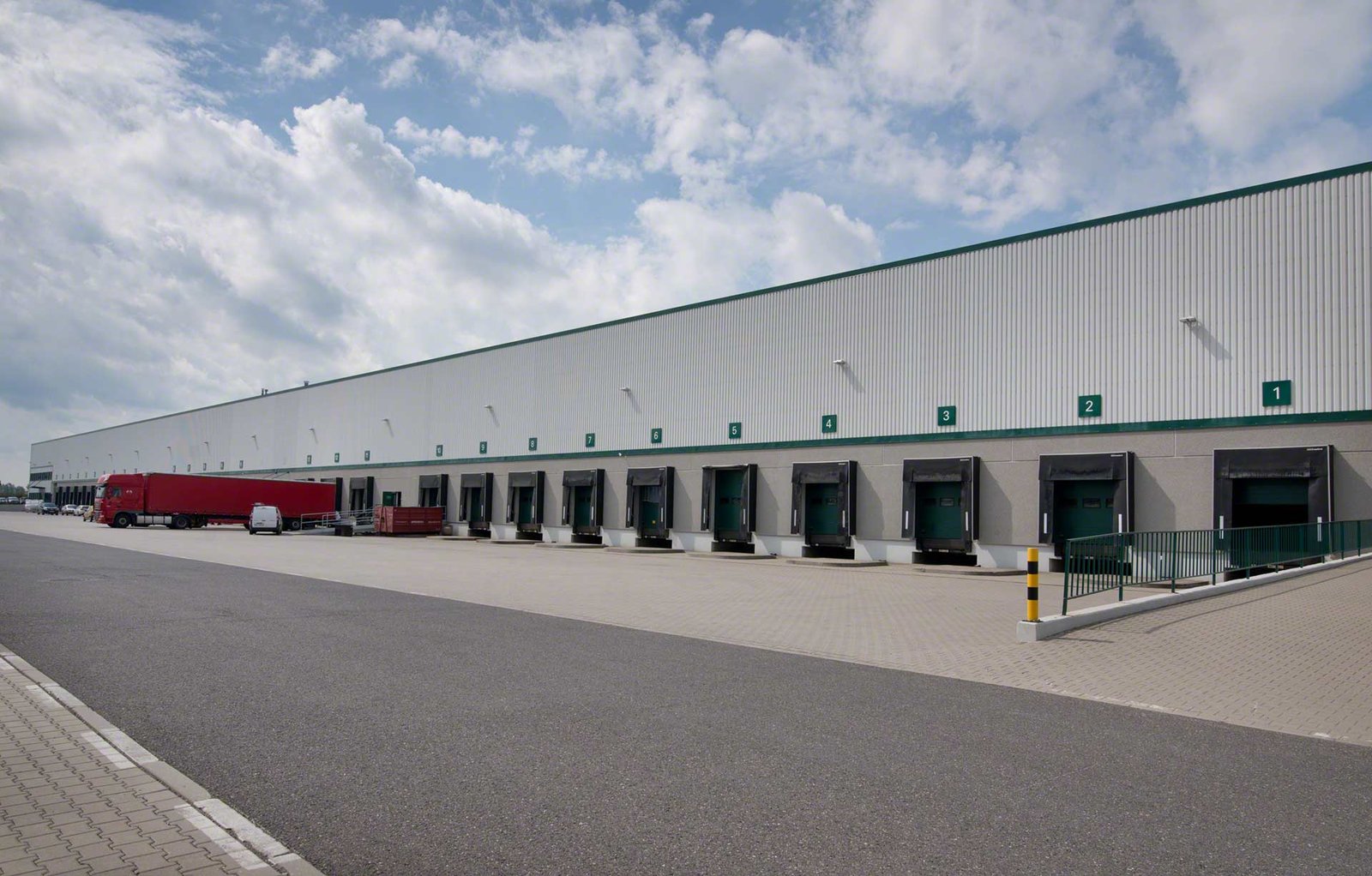
We build distribution centers for operators who receive product, sort it and ship it again, and for developers who build the box for a tenant yet to sign. These buildings differ from a plain warehouse because flow matters more than storage: cross-dock layouts, double-sided docks, long truck courts, trailer parking and gate control, plus mezzanines for conveyor and sortation equipment. They are the most traffic-sensitive buildings we construct.
This page focuses on the flow-through building. For longer-term storage, see warehouse construction, and for parcel and e-commerce operations, see fulfillment and logistics center construction.
The turnpike corridor and its exits
The turnpike's exits do the sorting for us. In Comanche County, exits serve State Highway 36 for Geronimo and Faxon, U.S. 62 and U.S. 277 for Elgin and Apache, U.S. 277 for Fletcher, Elgin and Sterling, and Whitfield Road for Fletcher, Cyril and Sterling. North of the county, U.S. 81 serves Duncan and Chickasha, and U.S. 62, U.S. 277 and State Highway 9 serve Chickasha and Anadarko. An owner can place a building at the exit that best fits a delivery radius and a labor pool.
We compare the corridor sites on practical grounds: distance to the ramp, utility availability, floodplain and drainage, zoning, and the number of left turns a truck must make. The Interstate 44 corridor page and the pages for Elgin and Chickasha have more on specific stretches.
Highway work you will drive through
Road work shapes delivery schedules. An Oklahoma Turnpike Authority notice of March 7, 2025 said I-44 was narrowed to one lane in each direction in Comanche County between mile marker 62 and near U.S. 277 toward Fletcher for shoulder repairs and guardrail replacement under an $8.5 million contract, with ramps staying open. A February 23, 2026 release described an $11.5 million pavement reconstruction from Randlett to Walters running through late summer 2026, plus a segment near the State Highway 36 interchange at Geronimo.
None of that stops a building project, but it affects concrete trucks, steel deliveries and the first year of operations. We plan haul routes and delivery windows around known lane closures, and we advise owners to ask their carriers about the same projects. A distribution center's tenants will care about transit time on the corridor, and an owner choosing between sites should know about what is planned.
Truck courts, queueing and gates
The truck court is the heart of a distribution center. Its depth sets how easily a trailer backs in, its pavement must carry loaded trailers turning at low speed, and its drainage must keep water from freezing or ponding at the dock. We design the court around the largest trailer the owner expects, add room for a queue so that trucks do not back up onto the public road, and put the gate where it can be staffed and monitored.
We also look at lighting, stormwater detention and the landscaping or screening the city may require. A site with a large trailer lot needs a plan for the runoff, and a detention pond uses land that would otherwise hold building. These items often decide how large a building a parcel can hold, so we look at them early, ahead of the building layout.
Trades inside a flow-through building
A distribution center depends on a long list of trades: earthwork and paving, tilt-up or metal wall systems, the roof, dock levelers and doors, fire protection, high-bay lighting, electrical service for conveyors and charging stations, and controls. We coordinate these as one schedule, with float placed where the risk is. The dock equipment and the electrical gear are the usual long-lead items.
Mezzanines and sortation platforms add their own structure and permit requirements. We bring the equipment integrator in during design so that column spacing, slab thickness and clearances match the equipment, and we reserve space for conduit and cable trays. Our tilt-wall construction page describes the usual shell for a box of this kind.
Scope of a distribution build
We build from the site up: grading and utilities, foundations and slab, the shell, roof and dock package, interior finishes for the office and driver areas, and exterior paving, lighting and fencing. The scope may also include trailer parking, a guard shack, a maintenance shop or a fueling area. We price those as separate items so that an owner can phase them.
Closeout includes testing and documentation of fire protection, a walk of every dock door and leveler, a check of the slab for flatness where the equipment needs it, and training on systems. Many owners ask for a punch list walk at the end of each phase, and we schedule that with them. See our commissioning and closeout service for what we hand over.
Who we build for
Operators and developers in logistics and distribution are the main buyers, and the distribution center page shows the building types they ask about.
We also build for retailers and food companies that run their own regional distribution. The questions are similar: where the trucks come from, how fast they turn and what the building must hold.
Show us your truck flow
Send us a site, the trailer counts and the flow you expect and we will return a layout concept, schedule and budget.
Common Questions
How many dock doors do we need?
It depends on throughput, not floor area. A planner usually starts with the number of trailers handled per day and the time each takes to load or unload, then adds a margin. We help owners test the count against the building depth, since adding doors lengthens the building.
Cross-dock or single-sided docks?
Cross-dock buildings are long and narrow, with docks on both sides, and they favor flow. Single-sided buildings are deeper and hold more storage. We draw both for the site and let the parcel dimensions and the operation decide.
Will highway construction on I-44 affect the project?
It can affect deliveries and trucking costs during the work. Turnpike repairs in Comanche County and between Randlett and Walters have narrowed lanes while ramps stayed open. We schedule heavy deliveries around known closures and keep owners informed.
What pavement does a truck court need?
Usually concrete, since loaded trailers turning and braking damage asphalt. The thickness and joint layout come from the engineer. We price concrete and asphalt options and the long-term maintenance difference.
Can we build the shell now and add docks later?
Yes, if the design plans for it. We can provide knockout panels, extra slab depth and utility stubs so that docks can be added without major demolition. Owners who expect growth usually find this cheaper than building every dock on day one.