
General Contracting Services
Self-Storage Construction in Lawton and Comanche County
People who move often need storage, and a town beside a large installation sees its share of arrivals and departures. One state encyclopedia entry says Fort Sill covered 93,828 acres and housed almost fifteen thousand soldiers in the early twenty-first century, and calls the post the economic engine that drives Lawton. We do not forecast demand for a storage owner. We build the facility the owner decides to build, and we are plain about what the site, the structure and the permit process will cost and how long they will take.
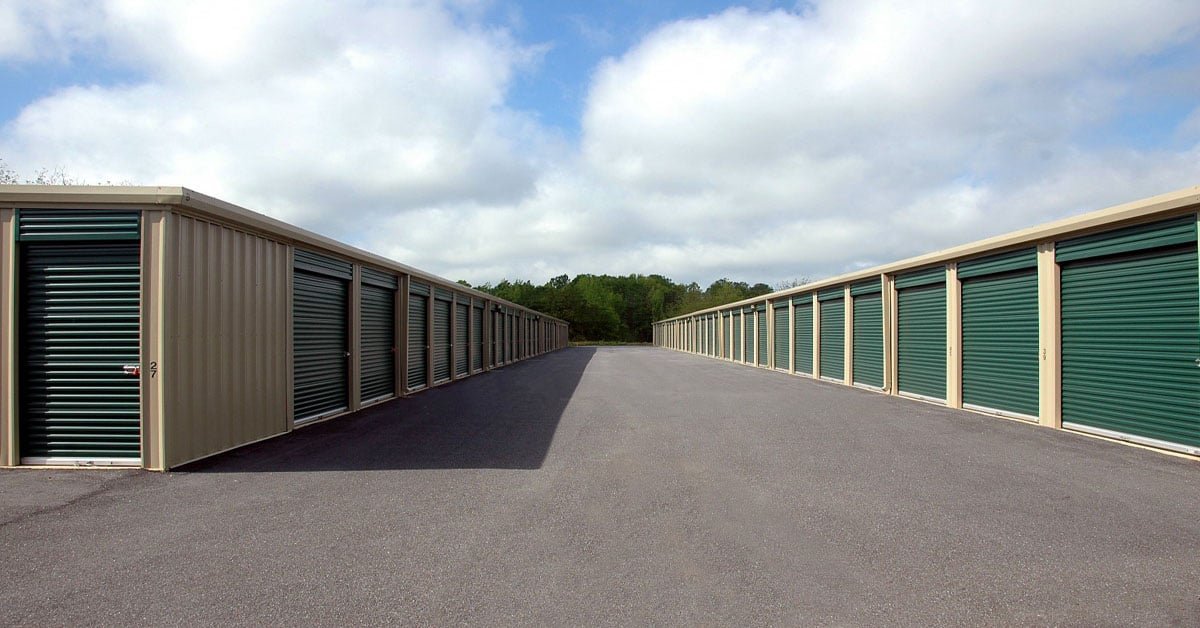
A self-storage project looks simple: rows of metal buildings, concrete, doors and a gate. The detail that matters is repetition. A hundred door openings must be square, a slab must drain to the same slope at every unit, and the paving must carry moving trucks. A small error repeated across a site becomes a large problem for the owner, who will hear about it from every tenant who cannot close a door or who finds water at the threshold.
We build drive-up unit buildings, climate-controlled buildings with interior corridors and mixed facilities with vehicle and boat storage. We write the scope so each of those is priced separately.
Where storage projects fit around Lawton
Growth outside the city is the usual pattern. Wikipedia places Elgin about 16 miles north-northeast of Lawton at the junction of US Route 277 and the western terminus of State Highway 17, with 3,656 residents at the 2020 census, up from 2,156 in 2010. A source like that is useful for scale, though not precise. Towns on the Interstate 44 corridor draw commuters, and the owner of a vacant lot near a busy junction is often the first to consider storage.
The exits along the highway matter too. Wikipedia's list for the H. E. Bailey Turnpike, signed as Interstate 44, shows exits in Comanche County at State Highway 36, US 62 and US 277, US 277 near Fletcher and Elgin, and Whitfield Road. A site visible from one of those exits has easy access, but it may need a turn lane or a driveway permit. Our notes for Elgin and Fletcher describe their settings.
Site, access and zoning questions
Start with the lot. A storage facility needs a deep, flat site with room for trucks to turn, so a long lot with a wide frontage is better than a narrow one. Drainage matters more than on many commercial sites because the buildings and paving cover most of the land. We check where stormwater will go, whether detention is needed and how the finished grade meets the street.
Then check the approvals. Zoning must allow storage, and the city or county may ask for fencing, screening, lighting and a particular building appearance. Entry gates and keypads need power and data. If the project is outside the Lawton city limits, we confirm which jurisdiction issues the permit and who inspects, since the rules and fees can differ. The owner may also be a commercial real estate developer with several sites, in which case we plan repeat details.
What we build here
The work begins with clearing, grading and utilities, then paving, then slabs and buildings. Most drive-up buildings are pre-engineered metal framed with a concrete slab, and our guide to pre-engineered metal buildings explains how the frame, panels and doors go together. Climate-controlled buildings add insulation, an air-conditioning system and interior corridors, so they sit closer to a conventional commercial building.
Paving is a major line. Drive aisles need thickness for trucks and a surface that drains, and the work is described under parking lot construction. We also build the office, the gate system, lighting and signs, and we coordinate with the owner's security vendor so cameras and gates are wired before the paving is placed.
Phasing to match leasing
Storage owners often build in phases. Phase one is the office, the first row of buildings and the full site infrastructure, so the facility can open and earn income while later buildings are added. We plan the underground utilities, the stormwater system and the main paving so later phases do not tear them up. Concrete slabs get the same attention: we pour with joints laid out to match the door rows, set the slope at each door to shed water away from the threshold and cure the slab before the building walls close it in. Door installation follows a final survey of the slab, because a door hung on a slab that is out of level will bind for the life of the building.
Weather affects the schedule and the product. The June 2023 Lawton storm brought golf-ball hail and gusts of 65 to 70 mph, and metal roof and wall panels dent under hail. We discuss panel gauge, finish and warranty with the owner, and we plan erection so panels and doors are installed and secured promptly instead of staged on site in the open for weeks.
Building outside the city
We build in Lawton and the small towns around it, including Elgin, Fletcher and Cache. Out-of-town sites need staging space and crew travel, which we include in the price. When land is cheap and a crossroads is busy, owners can build a modest facility in a town with a few thousand people. We say plainly when the market is too small for the plan the owner has drawn.
For a view of the whole corridor, see the Interstate 44 corridor. The self-storage facility page describes the building formats in more detail.
Price a storage facility
Send the lot, the unit mix or the phasing plan. We will return a site review, a priced scope by phase and a list of approvals. Contact General Contractors of Lawton.
Common Questions
What is the best building type for self-storage?
Drive-up units in pre-engineered metal buildings are the most economical per square foot. Climate-controlled interior buildings cost more and rent for more. Many owners build both, starting with drive-up buildings and adding a climate-controlled building when the first phase is leased.
How long does a storage project take?
Construction of a first phase usually takes a few months once the site is permitted and cleared. Permitting, drainage design and metal building deliveries can take longer than the build. We give you a schedule once we know the site, the building count and the approving jurisdiction.
Do you handle stormwater and paving?
Yes. Site grading, drainage, detention if required, aggregate base and paving are part of our scope. They are a large share of the project cost, so we price them separately and show the owner how a phased plan affects them.
Is hail a concern for metal storage buildings?
It can be. Large hail can dent thin panels and damage doors, and the June 2023 Lawton storm brought golf-ball hail. We review panel gauge, coating, door type and insurance terms with the owner. A heavier gauge adds some cost but may reduce claims.
Can you build outside the Lawton city limits?
Yes. We work in the surrounding towns and county. We confirm which jurisdiction issues the building permit, who inspects and what the fees are, and we add travel and staging cost to the price.