
Building Types
Truck Terminal and Cross-Dock Construction in Lawton, Oklahoma
Exit 62 on the H. E. Bailey Turnpike, at Whitfield Road, is listed as an incomplete interchange planned for conversion to a full one. That detail, drawn from a public exit list, is the kind of thing a truck terminal developer must know before buying land. A terminal lives or dies on how easily trucks can reach the highway, and an interchange that only serves some directions changes every route in the plan.
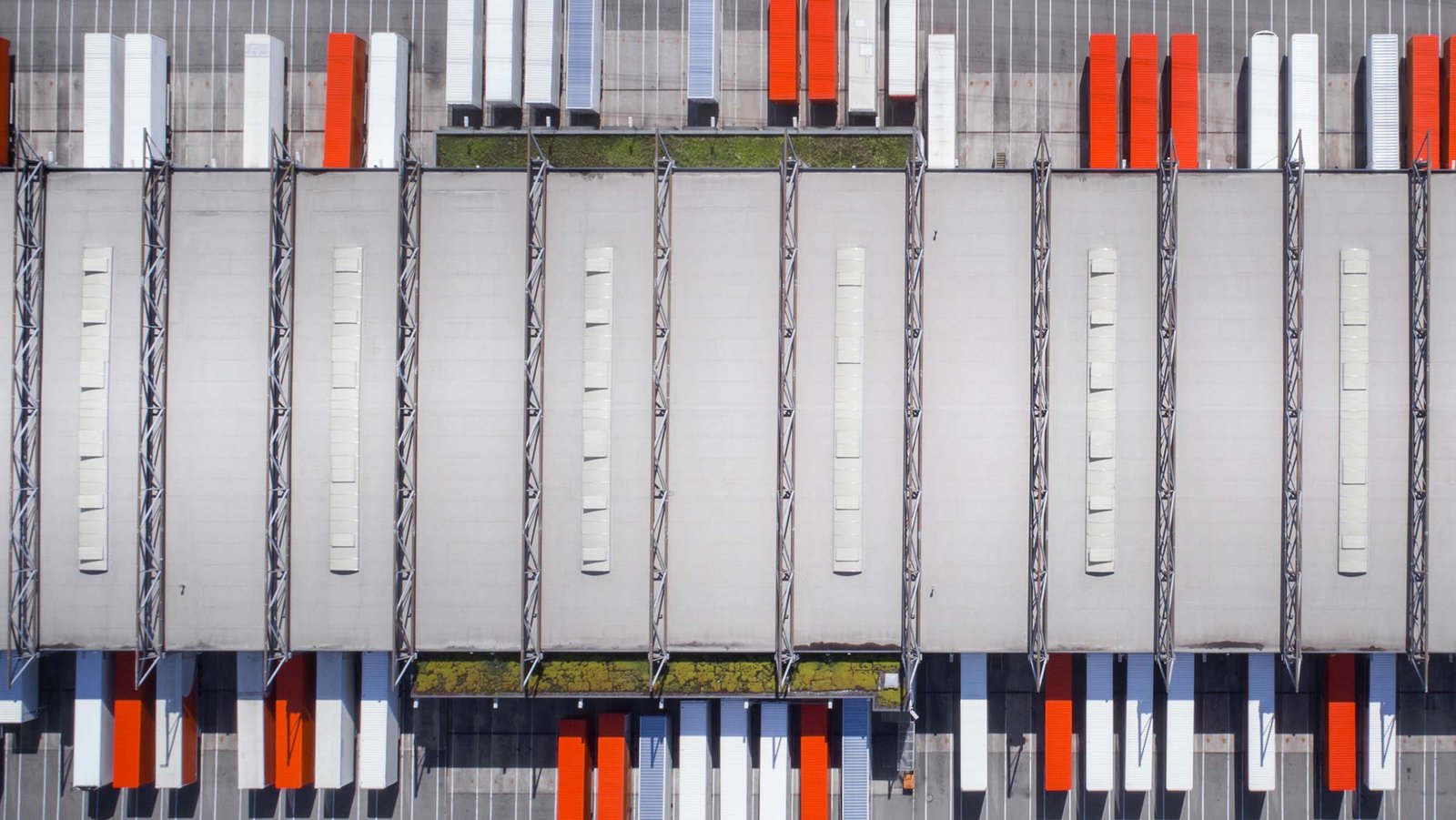
A cross-dock moves freight from inbound trailers directly to outbound trailers with little or no storage. The building is narrow, long and ringed with doors, and the yard around it matters as much as the structure. A terminal adds a parking area for tractors and trailers, a fuel island or maintenance bay in some cases, and offices for dispatch and drivers.
We build these facilities with attention to concrete, drainage and the flow of trucks. The building is the easy part. The pavement, the turning radii and the approvals make the project.
Highway access around Lawton
Interstate 44, the H. E. Bailey Turnpike, runs 86.4 miles and was signed as an interstate in 1982. Exits in Comanche County serve SH-36 at Geronimo, US 62 and US 277 at Elgin, US 277 near Fletcher and Sterling, and Whitfield Road. Highway 277 meets I-44 at the south end of Lawton, where the Airport Industrial Park is certified site ready. A terminal near that interchange puts trucks onto the interstate quickly and keeps them off residential streets.
On the west side, the rail park and the Goodyear Boulevard extension to US-62 are changing access. ODOT presented a new interchange there in April 2024. We study both the Interstate 44 corridor and the Airport Industrial Park when we advise on site selection, since a terminal's value depends on the next few years of road work as much as on today's conditions.
The dock building and the yard
A cross-dock often has doors on both long sides, with a narrow floor between them for forklifts and pallet jacks. Dock levelers, seals and bumpers are installed at each door, and dock lighting and fall protection are provided. The floor needs high-strength concrete, since lift trucks make repeated turns in the same paths. We set joint layouts to keep wheels from hitting joints at speed, and we coordinate slab thickness with the heaviest loads expected.
Outside, the truck court and apron carry far more load than a parking lot. Concrete aprons at the dock position protect against the rutting that trailers cause in asphalt. See truck courts and dock aprons for our approach, and parking lot construction for the tractor and trailer parking areas beyond the dock zone.
Drainage, spills and a busy site
Large paved areas shed water quickly, and detention may be required. The City of Lawton lists an erosion control detail among its standards, and a stormwater plan must show how runoff leaves the site. Fuel and oil on a truck yard create another concern: spill containment, oil-water separation and clear procedures for cleanup. We build drainage so trucks never stand in water and so any spill is caught before it leaves the property.
Utilities for a terminal are modest compared to a plant, but lighting and security systems are heavy users of power and communications. We route conduit under the pavement before it is poured. A forgotten sleeve under a truck court means cutting the concrete later. Our work on stormwater and drainage shows how we coordinate these items.
Keeping trucks and crews apart
Construction traffic and live terminal traffic should never meet. When we add to an operating terminal, we separate construction routes, set barricades and schedule paving work during low-volume windows. Flaggers direct drivers at points where the routes cross. A driver who is waiting on a dock door will not tolerate delay, so we explain closures in advance and keep the schedule they can plan around.
Permits and licensing follow the city process. Lawton requires a complete building plan, a site plan and scope documents, and the Fire Prevention Division reviews life safety and any fuel storage. Only city-licensed contractors may request inspections, and electrical, mechanical and plumbing must be done by licensed trades. Projects follow the building, fire and electrical codes the City of Lawton adopts and enforces; we verify which codes apply before design.
Working around road construction and weather
Road work shapes both the construction and the operating schedule. The Oklahoma Turnpike Authority has narrowed I-44 in Comanche County for shoulder and guardrail repairs under an $8.5 million contract, and has run an $11.5 million pavement reconstruction farther south, with more than $50 million planned over five years for I-44 upgrades. Lane closures slow concrete deliveries and affect when a terminal can open to its first customers.
We track those notices and build them into delivery plans for concrete, steel and stone. Paving usually decides the final schedule, since concrete needs cure time before heavy trucks can use it. We plan the order so the yard is complete before the first loaded trailer arrives, and we phase work so an existing yard can stay open when we expand.
Related facilities and industries
Terminals often sit beside or inside larger logistics sites. For storage with a longer dwell time, see logistics and fulfillment center construction and distribution centers. Smaller truck-related users may find flex space a better fit.
Owners in the logistics and distribution field often start with a yard plan, and we are glad to begin there. The path from a lot to a working terminal runs through grading, paving, drainage, a modest building and the permits, and we manage that whole path.
Bring the yard sketch
Share your door count, truck mix and candidate parcels. We will review highway access, drainage and permitting, then give you a budget and schedule that treat the yard and the building as a single project.
Common Questions
Is concrete or asphalt better for a terminal yard?
Concrete aprons at dock positions and in turning zones hold up to repeated trailer loads and fuel spills. Asphalt is acceptable for lighter parking areas, at lower first cost. Many terminals use both. We price the combination you need, and we review the soil report to size the base for the heaviest axle loads.
How close to the interstate should the site be?
Close enough that trucks avoid residential streets, with a full interchange for the directions you use. Not every Comanche County exit serves all movements; the Whitfield Road exit on the turnpike is listed as incomplete. We read the exit data and ODOT notices before recommending a parcel.
What permits does a truck terminal need?
A building permit through Lawton with a complete plan set, plus site and stormwater approvals. If the terminal has a fuel island, additional environmental and fire requirements apply. The Fire Prevention Division reviews plans, and the Planning Department checks zoning. We list every approval at the start so no agency becomes a surprise.
Can we build in phases and keep operating?
Yes. Typical phasing is yard first, then the dock building, then expansion bays. The key is separating construction traffic from live traffic and protecting utilities. Our phased construction work is designed for occupied sites, with scheduled cutovers and detailed communication with dispatch.
How do tornadoes and hail affect the design?
A terminal has lightweight canopies, tall doors and exposed vehicles. Lawton had gusts of 65 to 70 mph and large hail in June 2023, plus a tornado record that includes an F3 in 1979. We design canopies and door tracks for wind, advise on insurance and keep spare capacity in drainage for severe downpours.